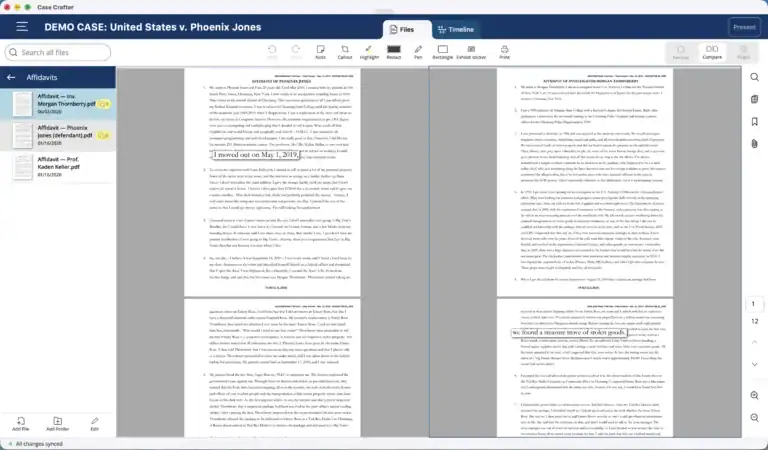

A grand jury is assembled before a prosecutor to determine whether there is probable cause to permit the prosecutor to take his or her case to trial. The process acts as a safeguard against prosecutorial overreach, requiring that an impartial group of ordinary citizens make an independent evaluation of the prosecution’s proof against the defendant. The grand jury decides whether there is sufficient evidence – known as probable cause – to formally charge a person with a serious crime, typically a felony. Because this process only evaluates the sufficiency of the prosecutor’s evidence, the defense takes no part in the proceedings, and the grand jury is not empowered to determine the guilt or innocence of the accused. The sole purpose of the procedure is to determine if a prosecutor may be permitted to proceed to trial.
What is a grand jury?
A grand jury is composed of ordinary citizens — usually chosen randomly from voting registration rosters — to hear the evidence against the accused as presented by the prosecution team. Grand juries are assembled both in federal courts (for federal crimes) and in state courts (for state crimes). Although federal and state laws concerning grand juries vary, the cases put to a grand jury are generally ones that involve a year or more of incarceration.
What does a grand jury do, and what function does it play in a court case?
The overall function of a grand jury is to determine whether there is probable cause to charge a suspect with a crime, issue an indictment, and ultimately send the accused to trial. In addition to its charging capacity, a grand jury is also an investigative body. The grand jury may request that the court compel the production of live witness testimony, or documentary evidence, through the court’s subpoena powers. The grand jury may make this request on its own, or it may make such a request in response to a request from the prosecution.
The two main functions of a grand jury
Grand jury’s investigative capacity:It has the authority to ask the court to compel testimony and subpoena documents to uncover criminal activity.
Grand jury’s charging capacity: It has the capacity to grant or deny the prosecution the right to bring an accused to trial.
Who makes up a grand jury?
The grand jury consists of 12–23 impartial citizens who are not familiar with the suspect or the case circumstances. Exact size varies from state to state.
However, formalized rules control federal cases. Per Rule 6 of the Federal Rules of Criminal Procedure, a federal grand jury must consist of no less than 16 members and no more than 23 members. Additionally, they sit for a period of 18 months up to 24 months, if required. In most cases, they meet once a week. However, these frequencies might vary depending on the case.
How is evidence presented to a grand jury?
The prosecutor collects evidence
The prosecutor is in charge of collecting and presenting evidence to a grand jury. In advance of its presentation to the grand jury, the prosecutor collaborates with law enforcement officials and legal assistants, collects documents, interviews witnesses, and reviews all material that supports an indictment and any other materials relevant to the case. The prosecutor presents evidence to the grand jurors and operates as their legal advisor. During the proceedings, the jurors can ask questions about the case, law, or the accused. The prosecutor responds to all inquiries, can point to its evidence, and can advise the jury about the law relevant to the case.
They relay information
When it comes to presenting the evidence, the prosecutor outlines the case in detail to the jurors. In relaying this information, the prosecutor will always cover three important aspects of the case, which are:
- Identifying the accused
- Outlining the acts that the accused allegedly committed
- Explaining the elements of the crime the prosecutor seeks to charge the accused with of having violated
Grand jury proceedings
Evidence is presented
First, the prosecutor presents a summary of the evidence that will be presented to support the prosecutor’s request for a finding of probable cause. The prosecutor then proceeds to present the evidence, including any written documents, pictorial images, and digital recordings, whether video or audio.
Witnesses are called
The prosecutor is also empowered to call witnesses to support the charges. During all proceedings, neither the judge nor defense counsel is present. The prosecutor can call the accused as a witness, but this event is uncommon because the accused can refuse to answer all questions.
It is important to note that per the Fifth Amendment, the accused can decline to testify and cannot be forced to incriminate him/herself. However, if the accused agrees to testify, he/she waives his Fifth Amendment rights entirely.
Evaluation and voting
After hearing testimony from the prosecutor and potential witness statements, the grand jury meets privately to determine whether there is sufficient evidence to issue an indictment. In federal cases, at least 12 jurors must vote in favor of an indictment. For state cases, the requirements for voting majorities vary.
Every part of the grand jury proceedings, except for the jury’s deliberations, are recorded; however, the transcript of the proceedings is deemed highly confidential and is unavailable to the public. Should an indictment issue, there may be occasion that the transcript of the proceedings is used in the accused’s trial, but such use generally requires a court order.
Filing of indictment or No true bill
An indictment is a formal document which is prepared by the prosecutor to charge the suspect with a felony. It is also known as a “true bill.” If the jury does not find that there is probable cause to charge the subject, then the decision is known as “no true bill.”
While this finding concludes the current proceeding, it does not legally prevent the prosecutor from presenting the case to a different grand jury in the future, especially if new evidence is discovered. There is no “double jeopardy” that attaches to grand jury hearings.
Are grand juries always used in every case?
No, grand juries are not used in all criminal cases. In many states, prosecutors decide whether they want to use a grand jury for the criminal case or not. Under the federal rules, a grand jury indictment is required for all felonies, which are defined as crimes punishable by more than one year of incarceration. However, in states like California and Missouri, a prosecutor can choose between securing a grand jury indictment or holding a preliminary hearing.
What is the difference between a grand jury and a preliminary hearing?
A preliminary hearing is held before a judge, while a grand jury consists only of the jurors, prosecutor, and potential witnesses. Preliminary hearings are conducted before a judge and are open to the public. At preliminary hearings, the prosecution, the accused and defense counsel are present. The prosecution presents its case to convince the judge a trial should be conducted, and the defense counsel is empowered to cross-examine witnesses and oppose the prosecution’s evidence. In both preliminary hearings and in grand jury hearings, the ultimate decision is whether the case against the accused can proceed to trial.
Summary
A grand jury is a citizen-led legal body that determines whether there is sufficient evidence to charge a suspect with a felony. A prosecutor is in charge of collecting and presenting all relevant evidence and making the case for indictment to the grand jurors. This makes the actual presentation of evidence a crucial part of convincing the jury that the subject in question did commit the alleged crime. In summary, the grand jury practice has two functions; an investigative authority and a charging authority. It protects individuals from unsubstantiated charges and it proves to be a vital step in any federal felony case and in many state-level prosecutions in the United States.
FAQ
Does a grand jury have to be unanimous?
A grand jury does not have to be unanimous, but there has to be a majority vote to issue an indictment. In federal cases, a majority is defined as at least 12 jurors who vote in favor of an indictment, while in state-level cases the majority varies depending on the number of grand jurors.
What is a grand jury indictment?
A grand jury indictment is a formal accusation and a final document that charges an accused of a crime. The accused is thereafter known as a defendant. The issuance of a grand jury indictment is required for all federal felonies.
When is a grand jury used?
In federal cases, the use of a grand jury is required for all felonies. At the state level, the rules vary across jurisdictions as to when grand jury hearings are required, or permitted.